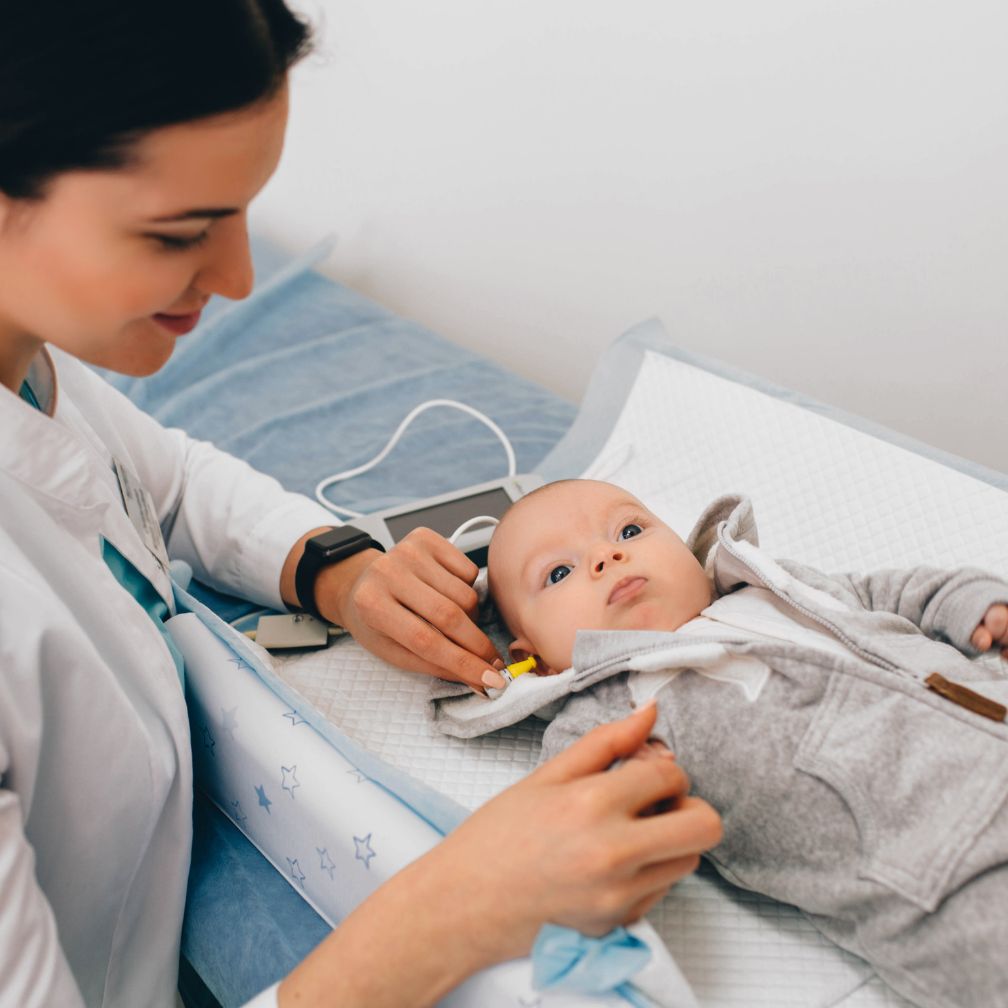
For guardians caring for an infant, realizing their child suffers from hearing impairment can trigger overwhelming feelings of anxiety. The reassuring truth is that by applying prompt testing and therapeutic help, young children with hearing deficits can truly succeed. Remarkably, these children can construct verbal communication, expressive ability, and strong bonds within their surroundings, fostering an enriched future!
Employing wearable hearing aids or internal cochlear implants delivers two exceptional clinical options for assisting infants with auditory challenges. In this section, our guide analyzes their functional parameters so you can determine the proper choice for your baby.
Analyzing Infant Auditory Deficits
Hearing loss in infants often develops due to a range of factors, including:
- Targeted genetic mutations (even within bloodlines having zero background of impairment)
- Known perinatal infectious diseases such as cytomegalovirus (CMV) or rubella conditions
- Adverse intrapartum events, such as fetal oxygen deprivation or preterm emergence
- Specific intensive care medications utilized inside specialized newborn facilities
Which part of the process proves most critical? Rapid clinical confirmation. For these reasons, infants within United States birth units undergo auditory screening prior to hospital discharge. Trained pediatric hearing clinicians consistently enforce the established “1-3-6” intervention timeline:
- Primary hearing check performed by 1 month of life
- Fully diagnosed within 3 months of age
- Clinical intervention (utilizing hearing aids or therapy) initiated within 6 months of age
Meeting these clinical targets offers infants an exceptional path toward healthy speech, expressive language, and cognitive development. If you seek direction concerning these newborn checks, your trusted pediatrician stands ready to assist!
Hearing Aids for Infants
For infants diagnosed with mild to severe hearing deficits, specialized hearing aids usually function as the frontline therapeutic choice. These compact, external instruments enhance environmental audio, helping babies process spoken dialogue and everyday sounds more distinctly.
Certified pediatric-grade hearing devices stand as:
- Exceptionally safe for direct use on newborns merely weeks post-birth
- Built featuring cushioned, comfortable ear molds that are replaced as the baby grows
- Outfitted with child-resistant battery compartments and dedicated pediatric safety elements
- Individually configured by a certified pediatric audiologist to accommodate your child’s unique hearing profile
While your child matures, their hearing devices necessitate routine recalibration to secure accurate fit and maximum benefit.
Cochlear Implants in Infant Auditory Care
If a baby has profound to severe sensorineural hearing impairment and derives limited success from conventional hearing aids, clinical teams frequently recommend a cochlear implant. Unlike conventional amplification tools, advanced cochlear implants:
- Call for precise surgical installation directly into the auditory system
- Direct sound past non-working areas inside the cochlea
- Transform ambient sound into direct electrical pulses that trigger the acoustic nerve directly
State-of-the-art cochlear systems function as:
- Officially FDA-approved for application in young infants starting at 9 to 12 months of age
- Uniquely successful when reinforced by specialized rehabilitation and strong family involvement
- Considered appropriate only after exhaustive clinical evaluations by a pediatric audiologist and ENT specialist
That pre-surgical path incorporates imaging, specialized auditory testing, and open dialogue concerning long-term communicative results.
Hearing Aids or Cochlear Implants: Distinguishing Features
- Mild to severe hearing challenges suit Hearing Aids; Severe to profound auditory destruction warrants Cochlear Implants
- Non-Invasive external placement: Hearing Aids; Invasive surgical placement: Cochlear Implants
- Sound processing amplification: Hearing Aids; Converts Sound Electrical Signals: Cochlear Implants
- Intervention starts in early infancy: Hearing Aids; Implantation starts at 9-12 months: Cochlear Implants
Summary Thoughts: Supporting Your Child’s Hearing Journey
If your newborn faces a confirmed hearing impairment diagnosis, rest assured that clear options and robust community resources exist to help you. With active assistance from pediatric hearing professionals, many children go on to develop speech and language milestones fully matching their playmates.
Irrespective of whether your child receives fitting for hearing aids or surgery for cochlear devices, prompt intervention produces a lifelong positive impact.
Have questions about your baby’s hearing health? Reach out to us today for a full evaluation and personalized care plan.